Six On Saturday: Reaching the heights or lost in the foothills?

I’ve definitely had the feeling of losing the battle this week.  Slugs and snails are eating their way through the young plants – cosmos, lettuce, borlotti beans are high among the casualties.  The parsnips are refusing to germinate – third sowing and the last! And it looks like the fox has taken a shine to wandering through the agastache at night. I’m also losing the battle to keep everything watered, no rain and the water butts are empty again.  It looks grim.  But this is Saturday and optimism rules:

One
IMG_2364

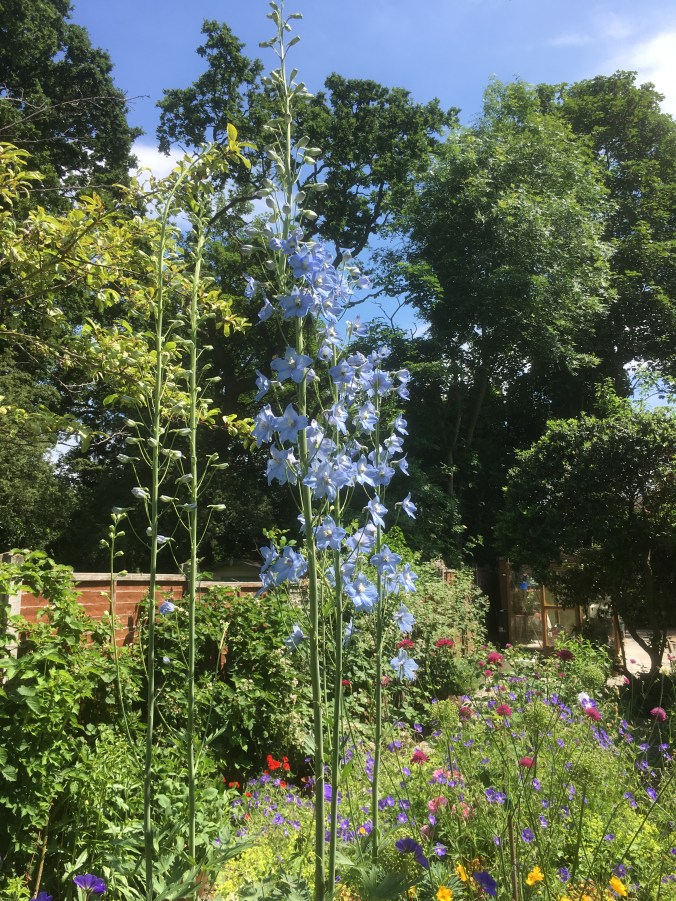
Definitely reaching the heights are these delphiniums, I think they must be six feet tall.  Taken as a division from the parental garden many years ago, they were divided again when we moved here and I am very pleased to see them thriving this year. I was meticulous about staking and tying them in but they have exceeded my expectations!

Two
IMG_2374

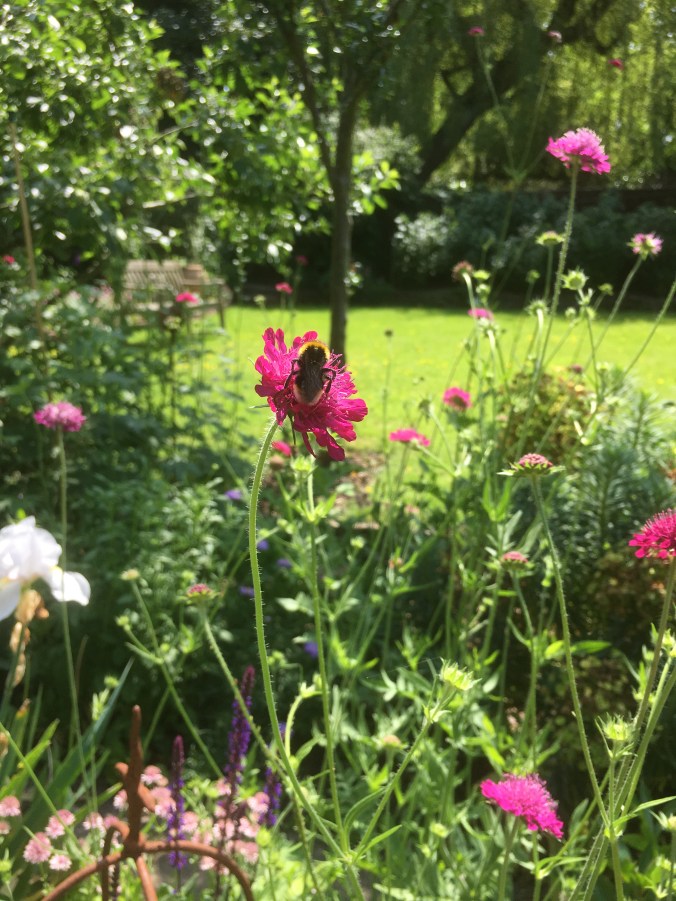
Also climbing upwards are the stems of Knautia macedonica.  These were planted out from 9cm pots last autumn and have settled down well.  They seem slug proof unlike some of the plants I have recklessly invested in.  Fortunately I remembered to stake them – just in time.  The bees love them.

Three
IMG_2372

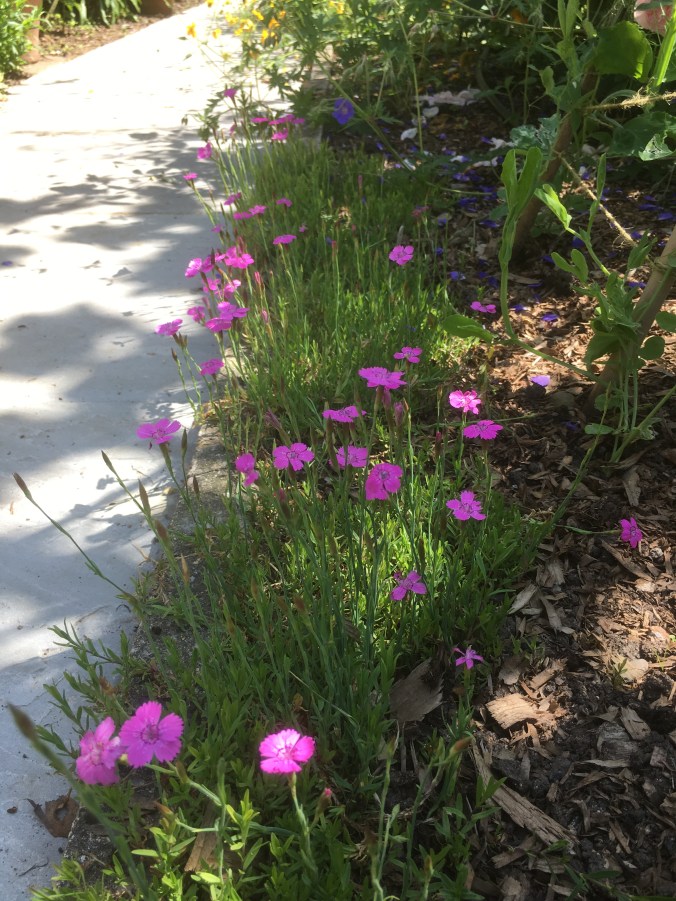
Down in the foothills where most of the slug damage is being done are these delightful dianthus deltoides.  They sulked after the garden move last year but have come good now.  No damage to report.

Four
IMG_2371

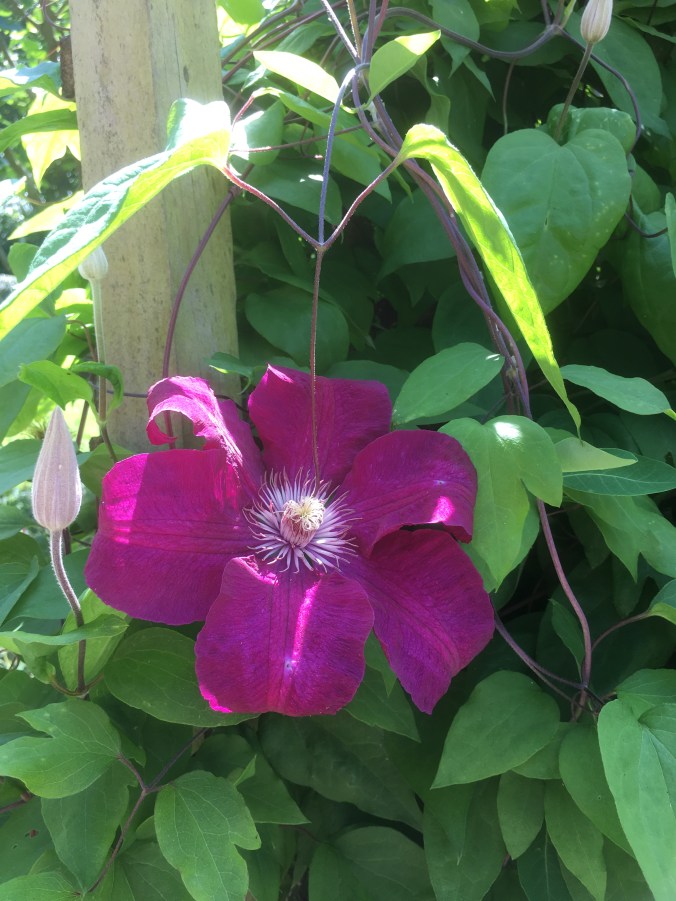
Up again in the heights is this lovely clematis, inherited from the previous owner.  I thought I had killed it last year as I tried to separate it out from the bindweed and lemon balm but it made a comeback.

Five
IMG_2362

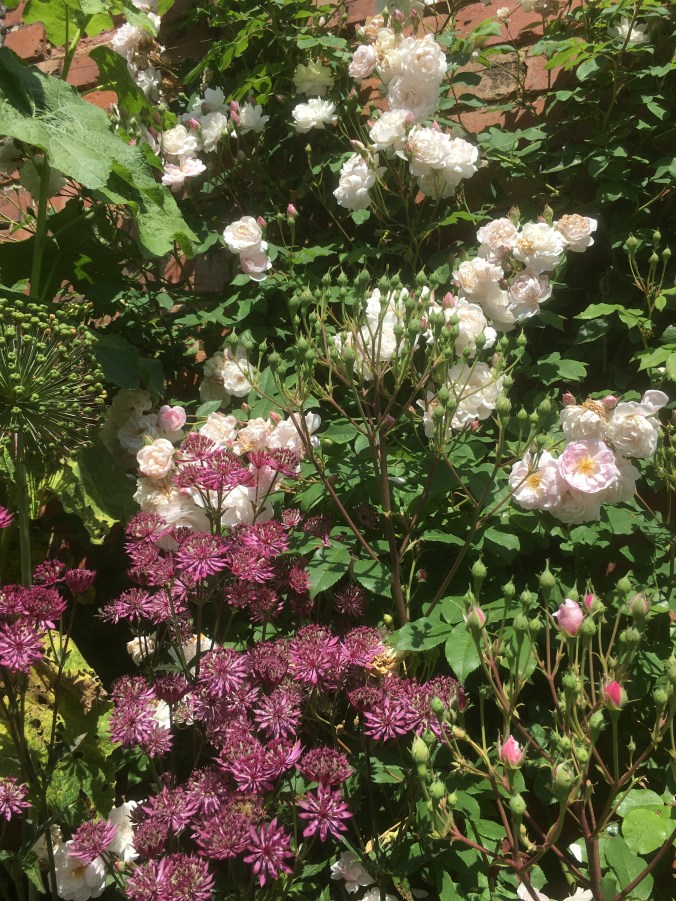
A combination of higher foothills and the heights is provided by the lovely rose Blush Noisette and the Astrantia Claret featured in an early six.

Six

And seeming to be safe in the foothills but, I hope, heading for the heights are these Tithonias.  Grown from seed, one group was planted out a few weeks ago, straight from modules into the ground.  The other group I potted on, returned them to the greenhouse and finally planted them out in the week. This group has made much more growth.  So it looks like potting on is the best option.  The final height is said to be 8 feet.  I’ll report back!

It’s June and I hoped I would be pottering by now.  Well almost, I have some spare cosmos and some zinnias which really do need to go out.  And I’m going to count watering as pottering – so nearly there.  I hope you are too.  Take a look at  The Propagator’s blog , where you’ll find the host of this meme, the ‘rule book’ and all the links to other sixer posts.
Six On Saturday: Temptations resisted?

The first temptation has been resisted.  Having spent last weekend removing slugs from the border, it put me in mind of the children’s song about worms ‘Big fat juicy ones, Tiny little squiggly ones’ and I was tempted to post six varieties of slugs.  But we’ve all had enough of them haven’t we?

I was also tempted to post six geraniums or six roses.  I think I’ve also bought at least six new plants in the last month – temptations not resisted.  I decided to mix it up:

One

IMG_2352

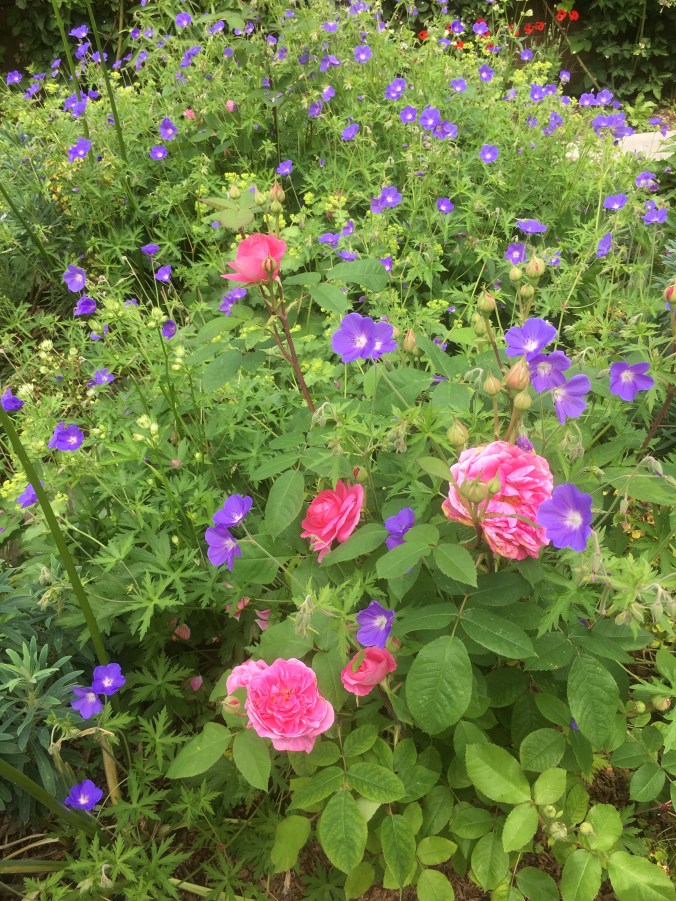
A rose and geranium combination in recognition of the arrival of June.  The rose is Gertrude Jekyll, so beautifully scented.  It really does fill the air with perfume.  The geranium is Brookside.  This is definitely asserting itself this year, the long stems thread round the other planting giving height to the border.  The RHS say stems are reasonably short at 50 cms but I would say medium height.

Two

IMG_2359

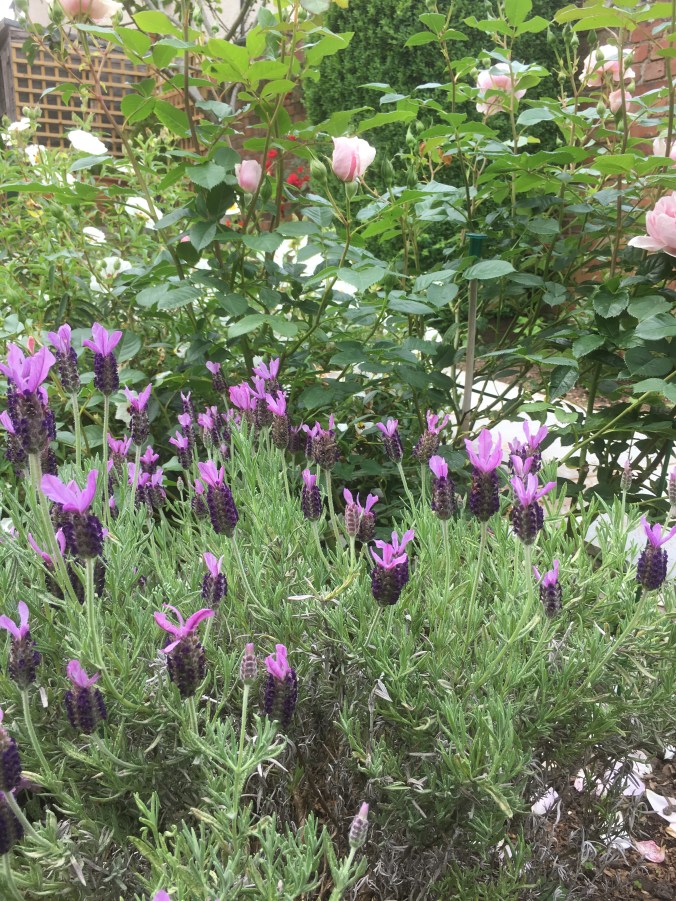
A rose and lavender combination and one of the new plants bought.  The rose is Natasha Richardson, opening pink and fading to a pale pink.  I was wondering what to underplant it with and eventually realised that the French Lavender living next door looked a good combination so I bought one more to plant towards the front.

Three

IMG_2355

A geranium on its own.  The eye popping Geranium psilostomen, also in its second year and achieving an impressive height.  It is pretty much self supporting although I have put a hoop in on the path side to keep it in its place.

Four

IMG_2350

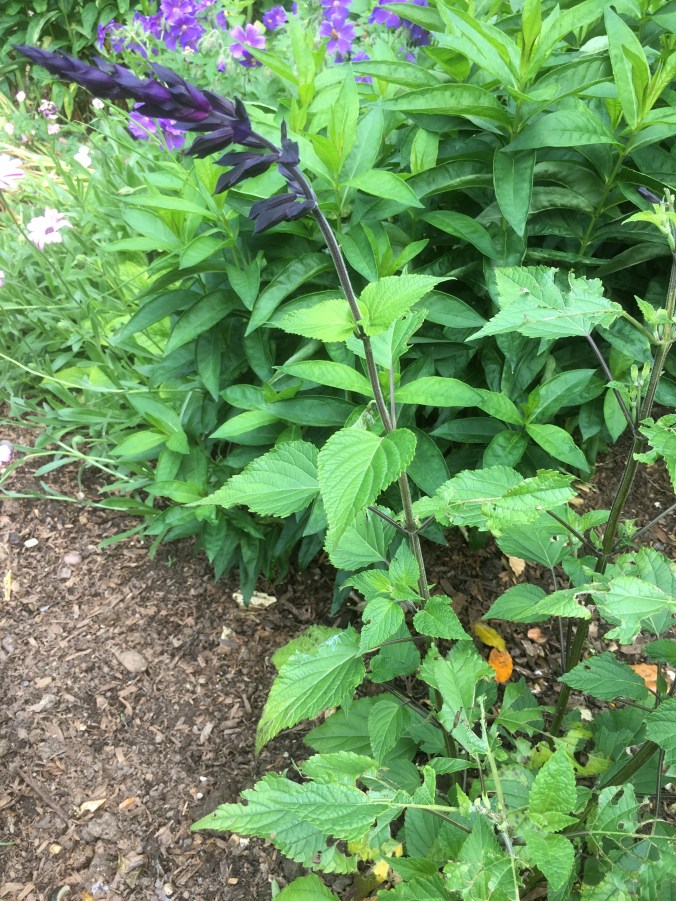
Another new plant: Salvia Armistad.  Featured more for the slug damage to the lower leaves.  I did wonder if this will survive a winter in my clay soil but decided to try it out.  On second thoughts it might not survive the summer if the slugs keep munching it.  I am going to try nematodes.

Five

IMG_2353

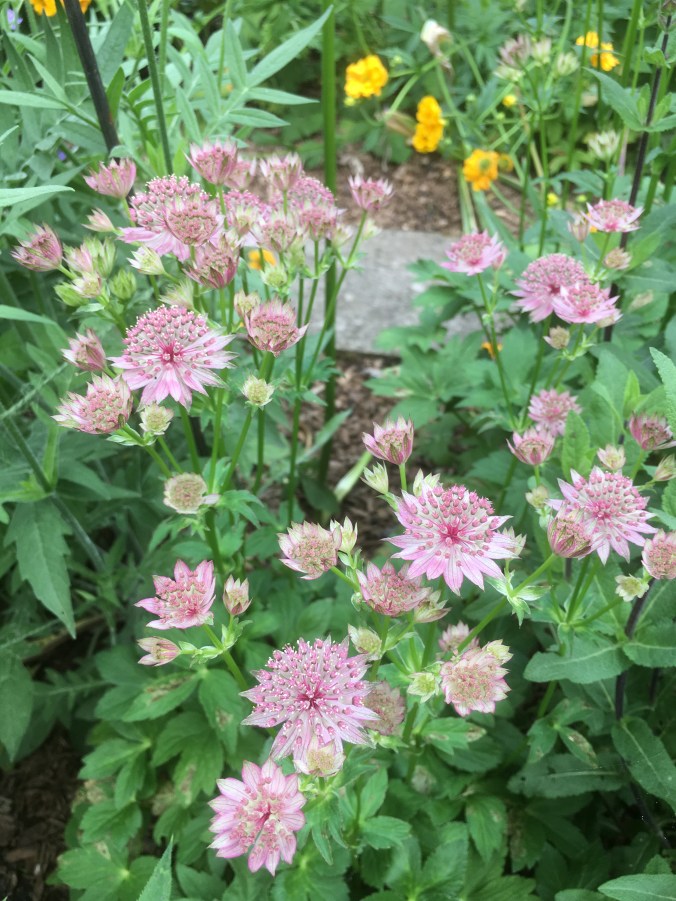
Last year I extended my collection of Astrantias.  I added Roma to the border.  It’s not come through as pink as I was expecting but I will give it time to settle.  It’s subtlety might be what the border needs.  I’ve already decided the geum in the back needs to be moved. Pink and yellow is not my favourite combination.

Six

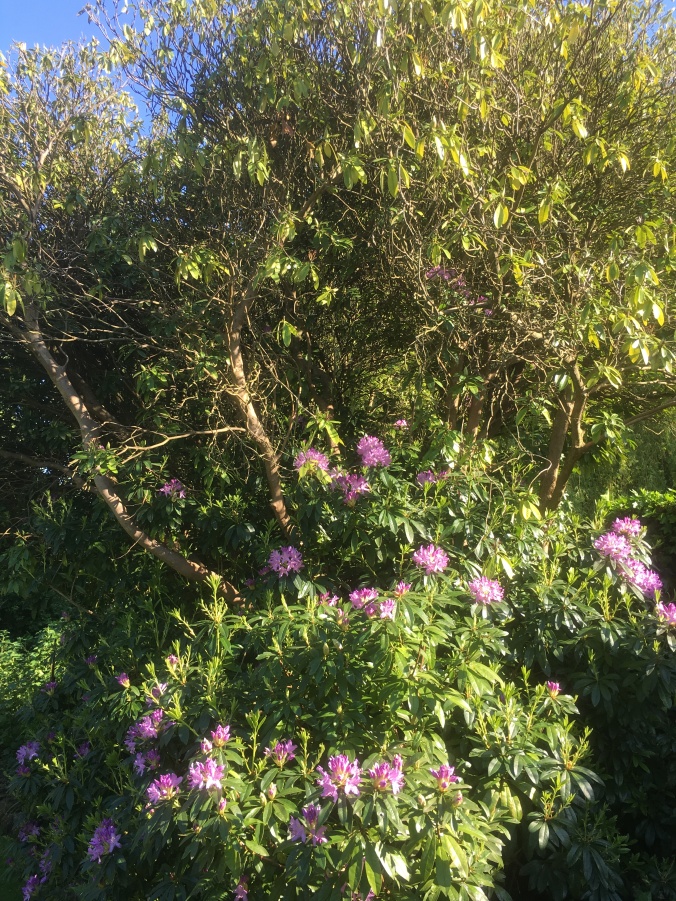
I can’t resist the temptation to revisit one of last week’s six.  I must say thank you to  Jim Stephens  John Kingdom and Tony Tomeo  who gave me advice on the two tier rhododendron.  With their help I’ve discovered that my ancient plant is the invasive, common R. ponticum.  I’ve been up the ladder to take a photo of the the top tier which is now in flower and I think the top and bottom are the same, that is, it is not a more rarefied rhoddie grafted on to the ponticum root stock. It’s quite a monster and dominates that side of the garden so it does need to be tamed a little.  I think I’ll be getting help with that one.  The first photo is the bottom flower, the second the top tier flower, the third the whole tree and the fourth the tree as is looked last week.

Each new Six On Saturday post brings new temptations, this week a rose on  Thomas Stone’s blog  has caught my eye.  On the list for the autumn temptations!  Be tempted at The Propagator’s blog where you’ll find links to all the Sixes.

Six On Saturday: The strange case of the two tier rhododendron and other oddities

So Monty Don recently said  ‘Gardening is easy. Stick it in the ground the right way up and most plants will grow perfectly well.’ Which is essentially true but every now and then strange things happen:

One

IMG_2322

I think I know why my rhoddy looks like this.  It’s possible that the tree was planted soon after the house was built, which would make it about 100 years old.  I think it had been left to its own devices and being on a north facing border it had reached forward for some sun.  I think the previous owner then cut it back hard at the bottom to regain some of the lawn.  My evidence: when we moved in I discovered a large pile of wood stashed behind the foliage.  Since then the bottom of the tree has regenerated and this year has put out some fabulously healthy flowers and more luscious green leaves.  But the top of the tree struggles on with yellowing leaves and smaller and much later flowers.  My guess is the bottom is sapping the energy of the top.  So do I radically cut back the top, probably reducing the height by half – which feels like vandalism, but if it needs to be done….or do I lightly prune the top every year until the tree balances itself out again?  It has plenty of water and although north facing it does get early morning and late afternoon sun so I think the conditions are okay.  Any thoughts?

Two

IMG_2320

This beautiful iris came free, picked up from the allotment sharing bench.  I think it is  ‘White City’ and last year they were all the palest blue colour fading to white.  This year there is an interloper.  Now since it was a large clump divided from an even larger clump maybe the purple iris has been there all along and has only  just flowered. Or has it been cross pollinated?  Either way I am enjoying them both.

Three

IMG_2324

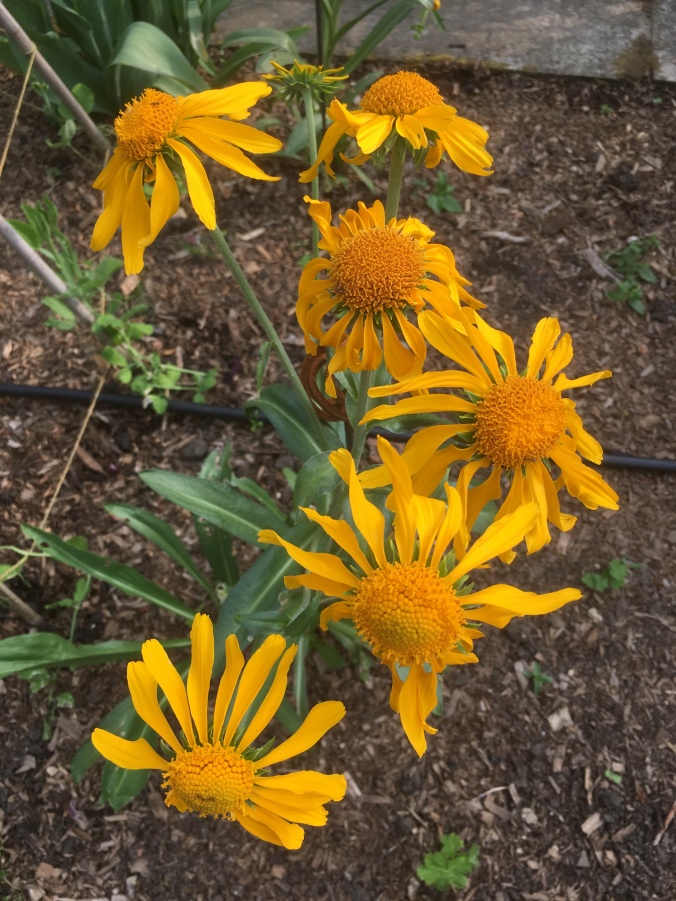
Is my Sneezeweed trying to tell me something?  I bought some last year with the aim of adding some late colour to the borders but it has been in flower since May.  Label says ‘Flowering period: late summer’.  My, the year is going fast!

Four

img_2321.jpg

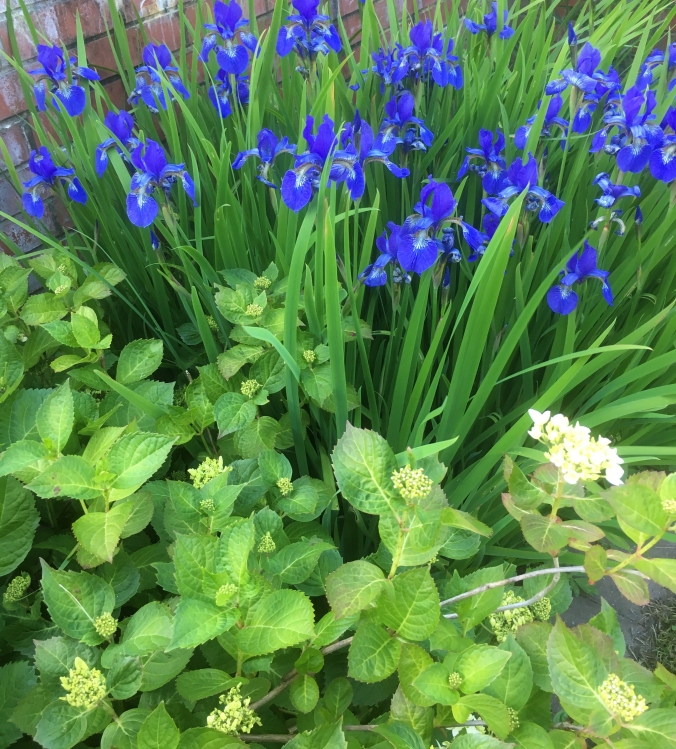
Back to some normal happenings.  These stunning Siberian irises came as several divisions from a friend’s collection.  This is their second year in the garden and they have multiplied amazingly, definitely a case of growing perfectly well.

Five

IMG_2327

The equally successful Astrantia ‘Claret’.  I did try to grow some from seed but that didn’t happen so I happily bought some 9cm pots which have bulked up well in their second year.  The roses in bud behind are ‘Blush Noisette’ – so close to popping but not for this week!

Six

IMG_2329

I must give a shout out to the growers at the Finchley Horticultural Society who also seem to have the knack of making gardening easy.  I decided to diversify my tomato growing this year.  Instead of 15 plants of one variety grown from seed I have six plants of three varieties bought at last week’s plant sale.  I’ve missed the roller coast ride of raising them from seed but I’m going to enjoy the variety: Marmonde, Golden Crown  and Alicante.  I was also tempted by some chilli plants and a couple of Romano peppers.  I’ve taken the plunge this year and planted them direct into the soil instead of in grow bags.  Let’s see what the greenhouse soil has got in it!  I have grown my own basil which I’ll be planting around the tomatoes.

There’s an extra gardening day again in the UK.  Will it be hot and sunny, hot and thundery or a wash out?  Let’s hope we can all find a way to enjoy the weekend whatever.  More gardening stories can be found at The Propagator’s blog.  The contributors also seem to be growing very easily.